Dynamic robots that learn

Share

Dynamic Robots and the AI Frontier: Marc Raibert’s Vision for the Future of Robotics

(This article was generated with AI and it’s based on a AI-generated transcription of a real talk on stage. While we strive for accuracy, we encourage readers to verify important information.)

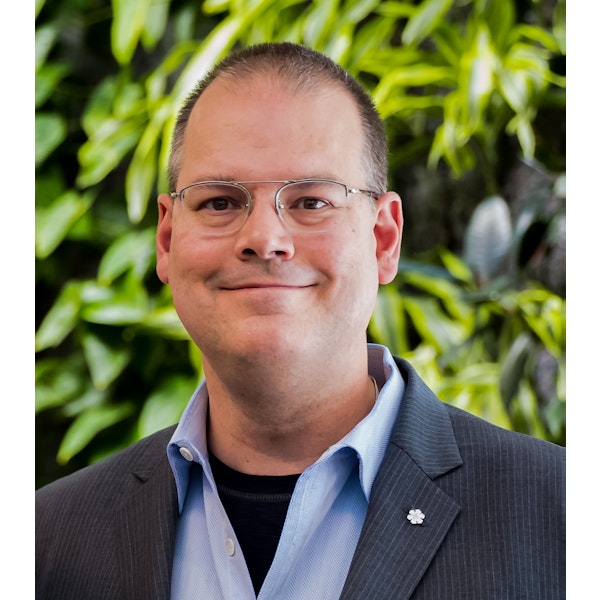
Marc Raibert

Dr. Marc Raibert, Executive Director of the RAI Institute and founder of Boston Dynamics, shared his lifelong passion for robotics at Web Summit Vancouver 2026. He highlighted Boston Dynamics’ pioneering work in creating dynamic, animal-like robots such as Atlas and BigDog, which captivated the public and brought advanced robotics into mainstream awareness by demonstrating unprecedented physical capabilities.

Dr. Raibert’s core philosophy emphasizes making robots move dynamically, mirroring humans and animals. His vision prioritized energy efficiency and dynamic activity, a departure from early, slow-moving designs. At the RAI Institute, the focus is on learning-based control methods, a new AI frontier, developed in collaboration with Boston Dynamics.

These control systems use human motion data, retargeting and adapting it for robot behavior. This approach enabled a human-form robot to perform complex tumbling, achieved through reinforcement learning and simulation-based training. Such versatile methods extend to diverse robot forms, including autonomous jumping bicycle-like robots and parkour robots navigating obstacles via vision systems.

Dr. Raibert discussed the “Moravec paradox,” where human physical dexterity remains a significant robot challenge, contrasting with rapid AI advancements in cognitive tasks. Achieving human-level physical capabilities, like nuanced movements in cooking or tool use, demands substantial progress in both software and crucial hardware design, including “low reflected inertia joints.”

Key challenges include the “dexterity problem,” where robots struggle with dynamic, non-static manipulation beyond simple grasping. Navigation also presents hurdles, as robots lack semantic understanding for intuitively navigating complex, unfamiliar environments. “On-the-job training” for robots, enabling them to “Watch, Understand, Do” tasks from human demonstration, is a critical development area.

Robots integrate diverse senses: proprioception, vision, LiDAR, and increasingly, auditory and contact force feedback, essential for complex tasks. Boston Dynamics robots have proven invaluable in hazardous environments like Chernobyl and Fukushima, performing measurements in radiation-affected areas inaccessible to humans, highlighting their potential for dangerous applications.

Looking ahead, Dr. Raibert anticipates continued robot integration in warehouses and factories within 3-5 years. However, widespread consumer adoption in homes faces significant obstacles: robots must be sufficiently capable, safe around people and pets, and affordable. He concluded by suggesting a broader definition of “humanoid” robotics, one that encompasses human intelligence, ambition, and morality, rather than just physical form.

Related
Game Over, Continue? Lessons from the ups and downs of building game studios

Game Over, Continue? Lessons from the ups and downs of building game studios

May 14, 2026 - 2 min read
Related
Building the future tech ecosystem

Building the future tech ecosystem

May 14, 2026 - 3 min read