IPHatch North America: The Startup Launchpad for Deep Tech Innovation
May 12, 2026 - 2 min read
Navigating the Future of Funding: Salil Deshpande’s Candid Insights on Venture Capital at Web Summit Lisbon 2025
(This article was generated with AI and it’s based on a AI-generated transcription of a real talk on stage. While we strive for accuracy, we encourage readers to verify important information.)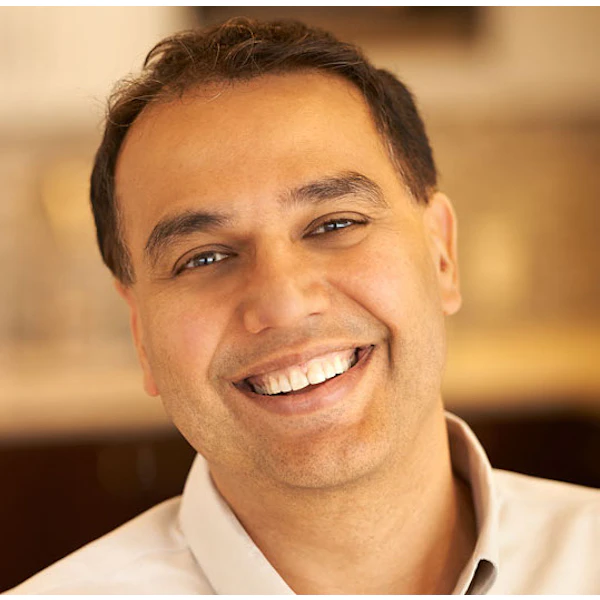
At Web Summit Lisbon 2025, Senior Correspondent Ben Bergman asked Salil Deshpande, General Partner at Uncorrelated, if venture capital is “broken.” An AI, Claude, identified key issues: a liquidity crisis, oversized funds, and unadjusted valuations. Mr. Deshpande disagreed on the liquidity crisis, arguing venture investors should expect returns over a decade. He noted mature portfolio companies achieve “pseudo-liquidity” through secondary markets, citing his firm’s ability to generate significant DPI.
The venture landscape is crowded with thousands of funds and companies, intensifying competition for founders. This volume makes differentiation challenging, and even strong analysis doesn’t guarantee success. While tough for individual investors, Mr. Deshpande views this widespread experimentation as beneficial for societal innovation.
The “venture product” typically yields a 14% Internal Rate of Return (IRR) for the median fund, surpassing market averages. Top-decile funds achieve over 30% IRR. Mr. Deshpande clarified that a 30% IRR signifies top-tier performance, indicating venture capital aims for substantial, yet realistic, returns.
Proliferating large VC firms have compressed IRRs across the industry, a natural outcome of increased competition. Mr. Deshpande acknowledged that FOMO can drive some investment decisions, leading to overvalued companies like OpenAI, where valuations anticipate significant future growth. He personally evaluated an investment in OpenAI at a $500 billion valuation.
A critical concern for Mr. Deshpande is the low, often negative, gross margins observed in AI model layer companies. This suggests a lack of pricing power and differentiation, despite their advanced technology. He highlighted that much of the economic value and gross margin in the AI sector is currently being captured by hardware providers, such as Nvidia.
As a solo General Partner managing approximately $750 million, Mr. Deshpande utilizes AI to automate numerous workflows, operating without traditional staff. He believes this efficiency could enable him to manage $2-3 billion. Despite this, he asserted that venture capital remains essential for accelerating growth, as other costs beyond engineering persist. He concluded by “anxiously waiting for the correction” in the current “exuberant” market, anticipating a negative event to invest more aggressively, having already slowed his pace.