Democratising fintech enterprise: entrepreneurship for the 99%
May 13, 2026 - 2 min read
Chris Smalls: Championing Worker Rights and Global Solidarity at Web Summit Vancouver 2026
(This article was generated with AI and it’s based on a AI-generated transcription of a real talk on stage. While we strive for accuracy, we encourage readers to verify important information.)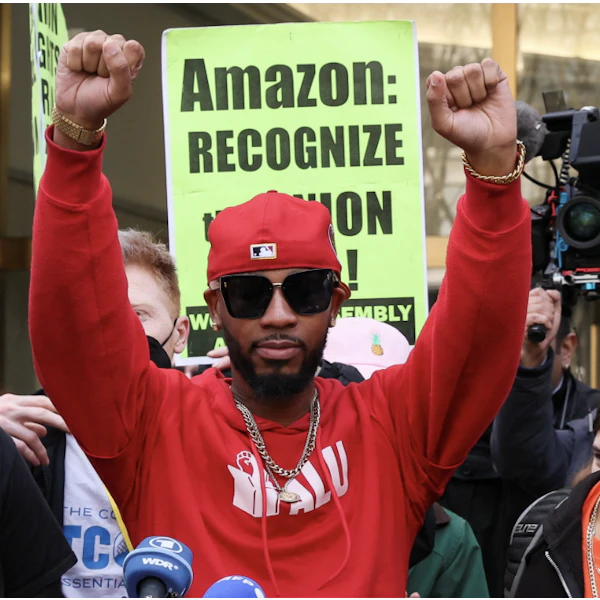
Mr. Chris Smalls, co-founder and former president of the Amazon Labor Union, addressed the Web Summit Vancouver 2026, emphasizing international solidarity. He proudly noted the Amazon Labor Union’s achievement as the first and only union for Amazon workers in American history, four years after its inception. He also celebrated the success of the Amazon Workers Campaign in Vancouver, which he supported three years prior, establishing Canada’s sole Amazon union.
Mr. Smalls highlighted British Columbia’s robust labor laws, particularly the “card check” system, which allows union recognition if a majority of workers sign applications, bypassing lengthy legal battles and union-busting tactics prevalent in the United States. He underscored his unwavering commitment to workers by revealing he declined invitations to the White House and a Louis Vuitton fashion show to stand with the Vancouver workers, demonstrating his dedication to the cause.
His personal journey into activism began six years ago during the pandemic when Amazon fired him. Jeff Bezos, then the world’s wealthiest man, initiated a smear campaign against him, which ironically propelled Mr. Smalls into becoming the public face of the Amazon labor movement. He embraced this role, leading to the successful unionization of Amazon workers in 2022, a significant milestone in labor history.
Mr. Smalls drew a direct link between corporate power and global conflicts, specifically Amazon’s $7.2 billion investment, alongside other companies, in Project Nimbus. This technology, he stated, is utilized to power the Iron Dome, assisting in targeting and killing innocent Palestinians. He invoked the trade union principle, “an injury to one is an injury to all,” asserting that this solidarity must extend to Palestinians.
Nine months prior, Mr. Smalls participated in the Freedom Flotilla’s Handella mission, aiming to break the illegal siege imposed on Gaza by Israel for over two decades. His motivations were multifaceted: Amazon’s involvement in the “genocide,” his desire as a father to prevent his children from witnessing daily atrocities on social media, and his outrage over American taxpayer dollars funding “endless wars” and “genocides” globally.
Recently, Mr. Smalls made headlines by “crashed” the Met Gala, an event sponsored by Jeff Bezos with a $10 million donation. His protest aimed to highlight Amazon’s investment in “genocide” and its refusal to negotiate a contract with his legally recognized union for four years, instead spending millions to delay negotiations in federal court.
He expressed hope that his efforts would lead to Amazon workers in the United States securing their first contract. Mr. Smalls views his activism as a lifelong struggle, acknowledging the inherent dangers and burdens, particularly as a Black leader in America, given historical precedents. He emphasized that billionaires accumulate wealth through exploitation and fear the collective power of people.
Mr. Smalls asserted that the “power of people when we come together” is the most effective strategy against corporate giants. He cited Jeff Bezos’s absence from the Met Gala red carpet due to public pressure as an example of this collective strength. Social media serves as a powerful tool for mass messaging, but he stressed the irreplaceable value of direct, face-to-face communication, lamenting how modern society isolates individuals.
He endorsed Upscroll, a social media platform promoting freedom of speech, especially concerning topics like Palestine and “genocide,” which face censorship elsewhere. Mr. Smalls encouraged activists to utilize all platforms, new and old, to engage diverse audiences and foster debates, rather than retreating into echo chambers. He believes conversations with those holding differing ideologies are crucial.
When asked about his relentless drive, Mr. Smalls posed a rhetorical question: “If I don’t do the work, who’s gonna do it?” The answer, he concluded, is “0.” He sees his fight against Amazon as a universal struggle, noting that Amazon’s vast reach means one in four Americans will eventually work for the company or one of its subsidiaries, making the fight for fair labor practices a fight for everyone’s future.
He advised that the key to radicalizing entry points and uniting people, regardless of political alignment, is to identify a common adversary: the boss. He recalled how Jeff Bezos thanking workers for funding his space trip galvanized many. Mr. Smalls also advocated for making organizing “appealing and cool” to attract younger generations, meeting them where they are. He concluded by promoting his upcoming memoir, “When the Revolution Comes, A Fight for the Future of the Working Class,” which he believes contains a piece of everyone’s story, essential for the ongoing revolution.