The genealogy of joy
Unlocking the Genealogy of Joy: From CPR’s Origins to AI-Powered Music at Web Summit Vancouver 2026
(This article was generated with AI and it’s based on a AI-generated transcription of a real talk on stage. While we strive for accuracy, we encourage readers to verify important information.)
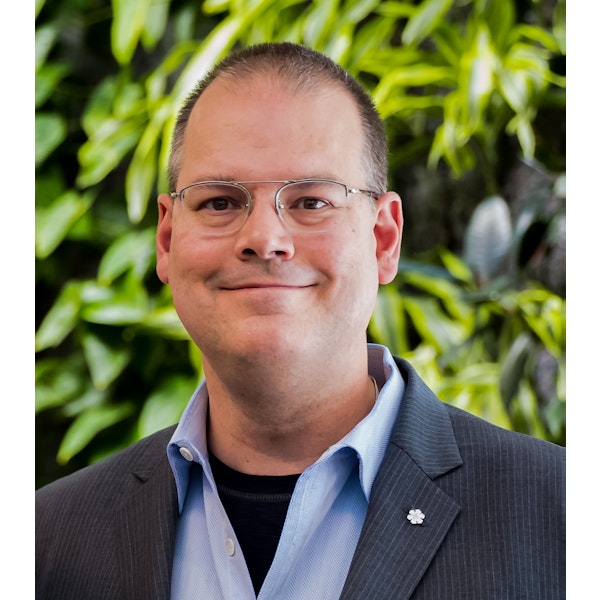
Mr. Aloe Blacc, a Grammy-nominated artist, entrepreneur, and changemaker, opened his talk at Web Summit Vancouver 2026 by inviting the audience to connect with the concept of joy. He presented a narrative about the “genealogy of joy,” linking seemingly disparate figures across seven decades.
These included a 19th-century metal tycoon, an Austrian doctor, an activist leader, and a pop star. These individuals, he explained, were “unwitting architects” of a miraculous rhythmic moment, demonstrating how life can be breathed into every moment, even when inspired by grief.
The story began with Maurice Falk, an American businessman who built a fortune in Pittsburgh by founding the Duquesne Reduction Company in 1894, smelting industrial metals. Upon his death in 1946, Falk left a $10 million endowment, establishing the Maurice Falk Medical Fund.
Phil Hallen, Falk’s close associate and a former ambulance driver, was appointed its president. Hallen’s past experiences, witnessing people die en route to hospitals in ill-equipped vehicles, underscored the urgent need for immediate medical intervention at the site of injury.
Hallen sought a transformative solution and found it in Dr. James Elam. In the early 1950s, Dr. Elam challenged the medical establishment’s view of exhaled air as waste. Inspired by 19th-century European midwives, he proved through calculations and experiments that exhaled air, containing 16% oxygen, was sufficient to save a life.
Dr. Elam demonstrated that “our waste could be another person’s miracle.” He shared his findings with Dr. Peter Safar, an Austrian doctor who had defied the Nazi regime and eventually came to the United States.
By 1958, at Johns Hopkins, Dr. Safar established the “ABC of life” – airway, breathing, and circulation – and developed the head tilt and chin lift techniques essential for CPR. Initially, this life-saving knowledge was confined to medical professionals within hospitals.
A profound personal tragedy propelled Dr. Safar’s mission beyond hospital walls. In 1966, his 11-year-old daughter, Elizabeth, suffered a massive asthma attack. Despite his unparalleled knowledge of CPR, local responders were untrained, and Elizabeth received no immediate aid.
By the time Dr. Safar reached her, her brain had been deprived of oxygen for too long, and she passed away. His grief became his fuel, vowing that no one should ever be too far from the “breath of life” again.
Dr. Safar and Phil Hallen then sought a community to bring this science to the streets. They partnered with James McCoy Jr., a social activist who founded Freedom House Enterprises in Pittsburgh’s Hill District in 1966.
McCoy, with his existing transportation infrastructure, recognized the potential for an ambulance service. Together, they recruited 20 men, many Vietnam veterans deemed “unemployable” by society. Dr. Safar trained these men for 32 weeks, eight hours a day, using a mannequin named Resusci Anne.
In 1967, these 20 black men became the world’s first paramedics, proving that life-saving power belongs in the hands of the people. Their pioneering work revolutionized emergency medical services, and over the next two decades, CPR gained global recognition.
CPR was popularized in the US by the television show “Emergency!” which helped influence new laws requiring emergency medical services. By the mid-1980s, even pop superstar Michael Jackson was aware of CPR.
During the 1987 recording sessions for his “Bad” album, Jackson underwent CPR training. Hearing the instructor shout, “Annie, are you OK?” (referring to Resusci Anne), he transformed this medical check into the iconic lyrics of his hit song, “Smooth Criminal.”
Mr. Aloe Blacc then connected this historical lineage to his own creative process. While driving in LA traffic, he found himself remixing “Smooth Criminal” with Ethiopian musical rhythms, inspired by a friend’s wedding. This spontaneous musical idea, a “genealogy of joy,” was a vibrant melody that filled him with happiness and demanded physical expression.
He explained that such ideas often remain undeveloped. However, with the advent of AI, he could bridge the gap from idea to creation instantly. He uploaded a 22-second voice memo of his musical concept into a musical AI application.
With a simple prompt, his idea transformed into a “pulsing beat” within seconds, demonstrating AI’s power to quickly manifest inspired moments.
Mr. Blacc emphasized that AI serves as a tool to sketch possibilities, ensuring inspired ideas do not “die on the vehicle” before reaching their full potential.
He concluded by presenting the AI-generated song, a culmination of a journey spanning from 1894 industrial metals, through midwives’ secrets, a father’s grief, black pioneers, and Michael Jackson’s genius.
Finally, the digital mind of AI brought this lineage of innovation and inspiration to the audience, delivering joy. Mr. Blacc reiterated that joy, like life, is a relay race, meant to be passed from one person to another.