
Canada’s AI Blind Spot: Why the Application Layer Matters
May 13, 2026 - 2 min read
From Lab to Life: Scaling Scientific Breakthroughs for Global Wellness
(This article was generated with AI and it’s based on a AI-generated transcription of a real talk on stage. While we strive for accuracy, we encourage readers to verify important information.)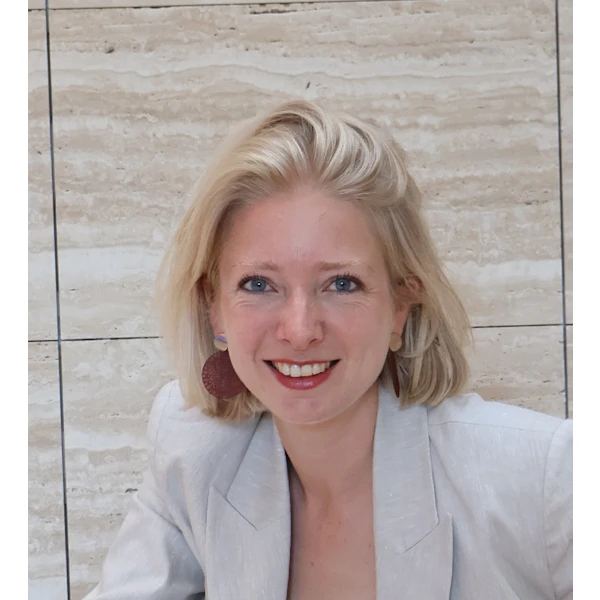
Ms. Anne Berends, CEO, CTO, and co-founder of SunLED Life Science, delivered an insightful presentation on translating scientific discovery into scalable health and wellness technology. She emphasized that true innovation extends beyond a “eureka moment” in the lab; it culminates in a product’s successful adoption in the market. This crucial distinction highlights a significant gap where many brilliant scientific ideas falter, failing to achieve widespread impact despite their potential.
Berends identified three primary reasons why scientific founders often struggle to bridge this gap. Firstly, there’s a tendency to confuse scientific evidence with market adoption. While robust evidence is indispensable, especially in health and wellness, it alone does not generate behavior change, customer demand, effective distribution, or widespread trust.
Secondly, founders, often rooted in academia, tend to wait too long, continuously refining experiments and publishing papers. In a startup context, this delay can be a sophisticated form of avoidance, preventing vital real-world feedback and market insights that are unavailable in a laboratory setting.
Thirdly, the pursuit of scientific elegance or engineering perfection can overshadow practical considerations. Products must be designed to be usable, affordable, and deployable for the actual customer, rather than solely focusing on their technical sophistication or theoretical completeness. This oversight often leads to products that are scientifically sound but commercially unviable.
Drawing from her experience at SunLED Life Science, Ms. Berends shared three key lessons. Her first lesson emphasizes that evidence serves as a powerful differentiator, lending credibility in a market full of trends and hype. However, evidence is not the product itself; customers seek solutions they trust, understand, and can seamlessly integrate into their daily routines.
The founder’s role is to translate complex science into an accessible, user-centric product experience, considering who the customer is, where and how the product will be used, and the desired emotional connection. This shift is fundamental to designing for real-world adoption.
The second lesson advocates for launching products before the science feels entirely “finished.” While protecting integrity and avoiding unsupported claims is paramount, achieving product-market fit requires engaging with the market. The real world offers invaluable insights into what users comprehend, resist, value, or ignore, and whether an elegant scientific solution genuinely addresses a significant pain point.
Market feedback is a form of research that cannot be replicated in a laboratory, making early market engagement crucial for product refinement and success.
Her third lesson stresses that scalability should be an inherent part of the innovation mission, not an afterthought. Introducing a scientific concept into a real-world product immediately brings forth constraints such as cost, form factor, distribution channels, logistics, messaging, and regulatory compliance.
While these may initially seem limiting, they are essential for refining the scientific concept, making it truly ready for widespread adoption and integration into customers’ lives. Scale shapes innovation, ensuring broader impact.
SunLED Life Science’s journey exemplifies these principles. Recognizing that people spend 90% of their time indoors, missing the health benefits of natural sunlight—specifically near-infrared (NIR) light—the company leveraged over 60 years of research on NIR’s positive effects on mood, cardiovascular health, immune system, and eye health.
Instead of merely deepening research, Ms. Berends and her team focused on making NIR light accessible to a broad audience. They innovated to integrate NIR into daily life through cost-effective, energy-efficient form factors, making the invisible light’s benefits tangible and intuitive. Their first product, the SunBooster, has garnered significant recognition.
Ms. Berends concluded by encouraging scientific founders to embrace entrepreneurship, launch their innovations, and actively learn from the market. The ultimate goal, she asserted, is not just to invent something true, but to successfully integrate that truth into the lives of everyone, seamlessly and at scale.