Why tech got agriculture backwards
Unearthing Canada’s Food Future: How AI is Revolutionizing Soil Health
(This article was generated with AI and it’s based on a AI-generated transcription of a real talk on stage. While we strive for accuracy, we encourage readers to verify important information.)
Canada faces a critical food security challenge, with its fresh food supply lasting only 72 to 120 hours if the US border closes. Despite being the world’s second-largest country with vast arable land and a top food exporter, Canada struggles with self-sufficiency. This contrasts sharply with the Netherlands, a smaller nation that, through technology and sustainability, achieves 50 times more value per acre and is a leading agricultural exporter, demonstrating potential for increased productivity.
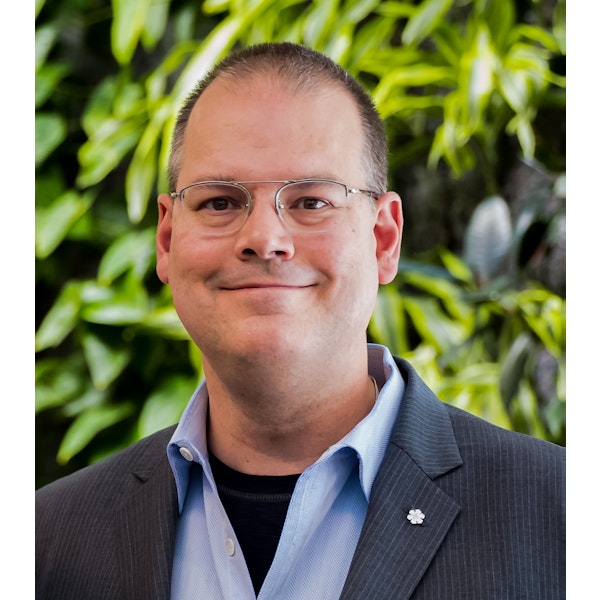
Karn Manhas, Founder of Miraterra, highlights Canada’s potential to boost its GDP by improving agricultural productivity. For 50 years, however, tech focused on macro-level solutions like drones, overlooking the true engine of agriculture: the soil. This complex, intelligent system, teeming with microbial life, has been neglected, leading to 70% of global topsoil degradation, impacting yields and increasing climate risks.
Recognizing soil’s regenerative capacity, Miraterra, founded from Terramera in 2022, developed “physical AI” to overcome outdated analysis tools. This digital translator for Earth measures soil properties in minutes, making the invisible visible at a fraction of the cost. Their process involves a secure data vault for precise sampling, advanced Raman spectroscopy for molecular fingerprinting, and DNA sequencing to map biology, amplifying each sample’s fidelity 100 to 1000 times.
The comprehensive soil data is interpreted by Landvault, an AI intelligence layer serving as the farmer’s interface. Landvault harmonizes vast global data and molecular signatures, communicating in over 100 languages to offer actionable advice. It recommends optimal crops for yield and profit, and suggests cover crops to enhance soil health, water retention, and climate resilience, democratizing soil science and balancing the playing field globally.
This technology dramatically accelerates food safety tests and soil sampling, transforming lab technicians into value-added advisors. AI amplifies human capabilities, making farming a more attractive, high-paying occupation. Mr. Manhas highlights that regenerative practices, guided by this technology, have revitalized desertified land in 4-5 years, increasing soil organic matter by 10% and water-holding capacity by 2 million liters per hectare.
Canada has a unique opportunity to lead in the $65 billion measurement instrument market, an area wide open for innovation. Miraterra, with 350 Canadian-owned patents and Vancouver-based facilities, champions data sovereignty, ensuring raw data remains farmer-owned, empowering landowners globally. Mr. Manhas advocates for a national digital soil map for Canada, costing less than a fighter jet, as critical national infrastructure. Powered by Canadian AI, this map would provide essential ground-level information, strengthening food security. The vision is to embrace technology amplifying nature’s intelligence, fostering a conversation between people and the planet, leading to reduced resource use, carbon sequestration, biodiversity, and more nutritious food. Miraterra aims to place a digitizer in every community worldwide, building a living digital soil map.