The EV battery retirement plan
May 13, 2026 - 2 min read
From Deep Tech to Mainstream: Marketing Fusion Energy’s Promise at Web Summit Vancouver 2026
(This article was generated with AI and it’s based on a AI-generated transcription of a real talk on stage. While we strive for accuracy, we encourage readers to verify important information.)
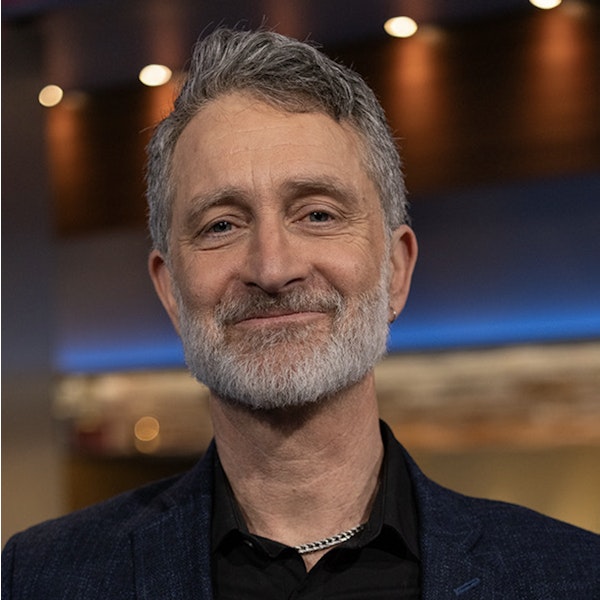
Mr. Joe Paluska, Chief Marketing Officer for Commonwealth Fusion Systems (CFS), addressed Web Summit Vancouver 2026 on marketing deep technology, specifically fusion energy. He explained fusion as the sun’s power source, merging hydrogen atoms for immense energy release. Unlike fission, fusion offers no meltdown risk or long-lived radioactive waste, positioning it as the ultimate clean energy solution.
The scientific understanding of fusion dates to Sir Arthur Eddington in 1920. Post-WWII, global efforts focused on achieving “Q greater than 1″—producing more energy than consumed. CFS, an MIT spin-out, is building its Spark tokamak near Boston, utilizing high-temperature superconducting tape, Rebco. This innovation enables powerful, compact magnets, crucial for fusion power plants.
Spark is 70% complete and expected to be operational in under two years, aiming to achieve Q greater than 1. This will be CFS’s “Kitty Hawk moment,” making them the first private company to reach this milestone. Lawrence Livermore Labs previously achieved Q greater than 1 nine times in 2022, validating the scientific feasibility of fusion energy.
Mr. Paluska highlighted the challenge of marketing fusion, an “invisible” process contained within a magnetic bottle and concrete structure. Despite this, fusion promises abundant energy; a single water bottle contains enough fuel for an individual’s lifetime. The Earth’s oceans hold enough fuel to power society indefinitely, making fusion a truly limitless resource.
Public awareness of fusion is low, often confused with fission. CFS targets younger generations, including millennials and Gen Z, who find hope in fusion’s promise, countering their often-dystopian world view. CFS’s “QGRN1 campaign” builds excitement and demonstrates commercial progress, employing a “lightning and thunder” strategy for investors and the general public.
To broaden appeal, CFS adopts a consumer brand approach, integrating fusion into diverse cultural spheres. This includes a keynote at CES, a “fusion comedy show” to demystify science, and fashion collaborations. Designer Gabby Hirst incorporated tokamak designs into her collections, leading to CFS’s presence at Paris and New York Fashion Weeks.
The campaign slogan, “Leap to Limitless,” embodies humanity’s giant leap towards limitless energy, framed as “Humanity’s Power Move.” CFS plans to treat Spark’s Q greater than 1 achievement like a rocket launch, aiming for an “Apollo 11” level of global attention. Concurrently, they are designing Arc, a 400-megawatt power plant.
Arc is slated for construction near Richmond, Virginia, with Dominion Energy. Google and Italian energy company ENI have already pre-purchased power from the Arc plant, projected to be online and connected to the grid in the early 2030s, approximately five to six years from now. This rapid timeline reflects deep tech’s potential for market dominance within 10-15 years.