The EV battery retirement plan
May 13, 2026 - 2 min read
Unlocking Natural AI Interaction: Quinn Favret on Teaching Machines the Art of Being Human
(This article was generated with AI and it’s based on a AI-generated transcription of a real talk on stage. While we strive for accuracy, we encourage readers to verify important information.)
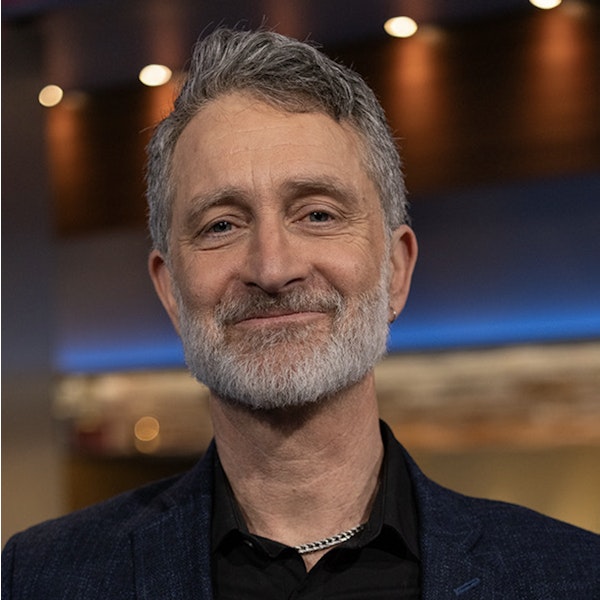
Quinn Favret, Co-founder and COO of Tavus, introduced his company as an AI research lab building foundational models for “human computing.” Based in San Francisco, Tavus has secured $70 million in funding. Their core mission is to create AI interfaces enabling machines to communicate with humans as naturally as people interact.
Tavus’s research develops AI interfaces where machine communication mirrors face-to-face human interaction. This involves AI systems understanding voice, video, and conversational turn-taking nuances. These advanced capabilities power conversational AI agents that integrate into platforms like Zoom and Google Meets for various applications.
These AI agents are tailored for diverse enterprise applications, including AI interviewing, learning and development, training, and coaching. Tavus’s APIs are utilized by leading organizations such as Amazon Health, CVS, One Medical, and Deloitte, showcasing practical application and industry adoption of their human computing models.
Mr. Favret highlighted Tavus’s early beginnings in 2020, predating widespread advanced AI models like ChatGPT. Tavus was one of only two AI companies in its Y Combinator cohort. The company was founded on the belief that AI humans represent the future, necessitating human-like interfaces for effective interaction.
He traced human-machine interaction from the Command Line Interface (CLI), where users learned rigid, binary machine language. While ChatGPT offered text-based improvements, it still lacked natural language processing, often frustrating users when AI failed to grasp subtle human intent.
Human computing addresses this by teaching machines “the art of being human.” This involves AI enabling sight, understanding, hearing, and interpreting subconscious human signals. The goal is to transform machines from tools into collaborative partners, shifting the paradigm so AI adapts to human communication styles.
This approach effectively combines machine and human strengths. Machines offer scalability, cost efficiency, and significant intelligence. Humans, conversely, bring trust, connection, relationships, and emotional intelligence (EQ) to the interaction. This synergy leads to more effective and meaningful engagements across applications.
The industry observes positive outcomes from human computing, including higher conversion rates, improved knowledge retention, and stronger trust in relationships. These benefits span go-to-market strategies, learning development, training, interviewing, healthcare, government, schools, and education.
Mr. Favret concluded by challenging the misconception that intelligence alone suffices for AI. He emphasized that AI’s true value lies in its usability and ability to be effectively put to work for humans. Tavus is dedicated to building this accessible, interactive future, inviting exploration on Tavus.io.