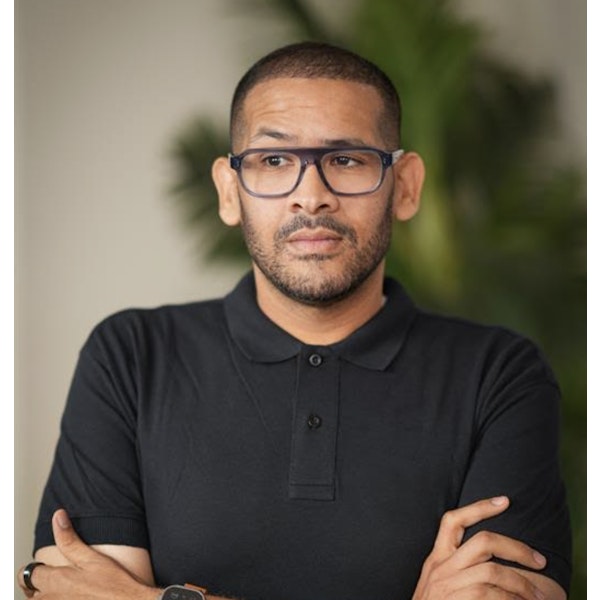
Press Conference with AHOY Co-founder and CEO Jamil Shinawi
May 12, 2026 - 2 min read
Unlocking Enterprise Potential: How AI Agents are Redefining Business Workflows
(This article was generated with AI and it’s based on a AI-generated transcription of a real talk on stage. While we strive for accuracy, we encourage readers to verify important information.)
At Web Summit Vancouver, Mr. Ben Kus, Chief Technology Officer at Box, discussed the evolving landscape of AI agents. He defined an agent as an “objective-following intelligent entity,” essentially a large language model that executes tasks by utilizing various tools. Mr. Kus drew a compelling analogy, comparing these AI agents to highly capable contractors hired to perform specific work within an organization.
A significant challenge in effectively deploying AI agents is providing them with adequate business context. While agents possess advanced intelligence, they inherently lack specific knowledge of an organization’s unique operations, internal tools, and proprietary data. This contextual gap is a critical hurdle that businesses must overcome to maximize agent utility.
Mr. Kus observed that while many have experienced the “aha moment” with general generative AI like ChatGPT, fewer have yet realized the dramatic advancements in specialized agent capabilities over the past three to six months. These modern agents offer significantly improved functionalities, representing a largely untapped potential for enterprise productivity.
Today’s agents are capable of performing complex tasks, from debugging software and generating test cases for developers to analyzing and creating reports from diverse unstructured data for knowledge workers. They can process files, presentations, spreadsheets, images, and audio, potentially saving hundreds of hours of human effort across various business functions.
The rapid pace of change in AI agent technology demands an agile approach from organizations. Unlike traditional software infrastructure, which remains stable for years, AI models and agent harnesses evolve every few months. This necessitates building in adaptability and continuous iteration rather than relying on lengthy, static evaluation periods for AI solutions.
Identifying suitable tasks for agents often boils down to the clarity of user instructions. Mr. Kus emphasized that, much like human contractors, agents require precise, detailed guidance and examples to produce desired, valuable outcomes. He noted that modern agents, including those from Anthropic, OpenAI, and Box, are increasingly adept at handling “messy” or non-authoritative data.
Users should exercise caution when delegating tasks if they cannot provide clear instructions or sufficient context. Without proper guidance, agents may deliver simplistic or irrelevant results. However, the risk of “hallucinations” is significantly mitigated when agents are supplied with ample context and explicit instructions, leading to more reliable outputs.
The future growth of agent capabilities depends on the simultaneous advancement of three key components: the underlying AI models, the sophistication of agent platforms, and the quality and accessibility of user data. Mr. Kus envisions a future where every individual effectively becomes a “manager of agents,” integrating these intelligent tools into daily workflows to boost productivity across all professional roles.